Utility AI Platform
The short version
The full story
An agent answering a billing question needs the customer’s account, payment history and current situation in view. When that customer changes the subject, the suggested reply needs to change with them.
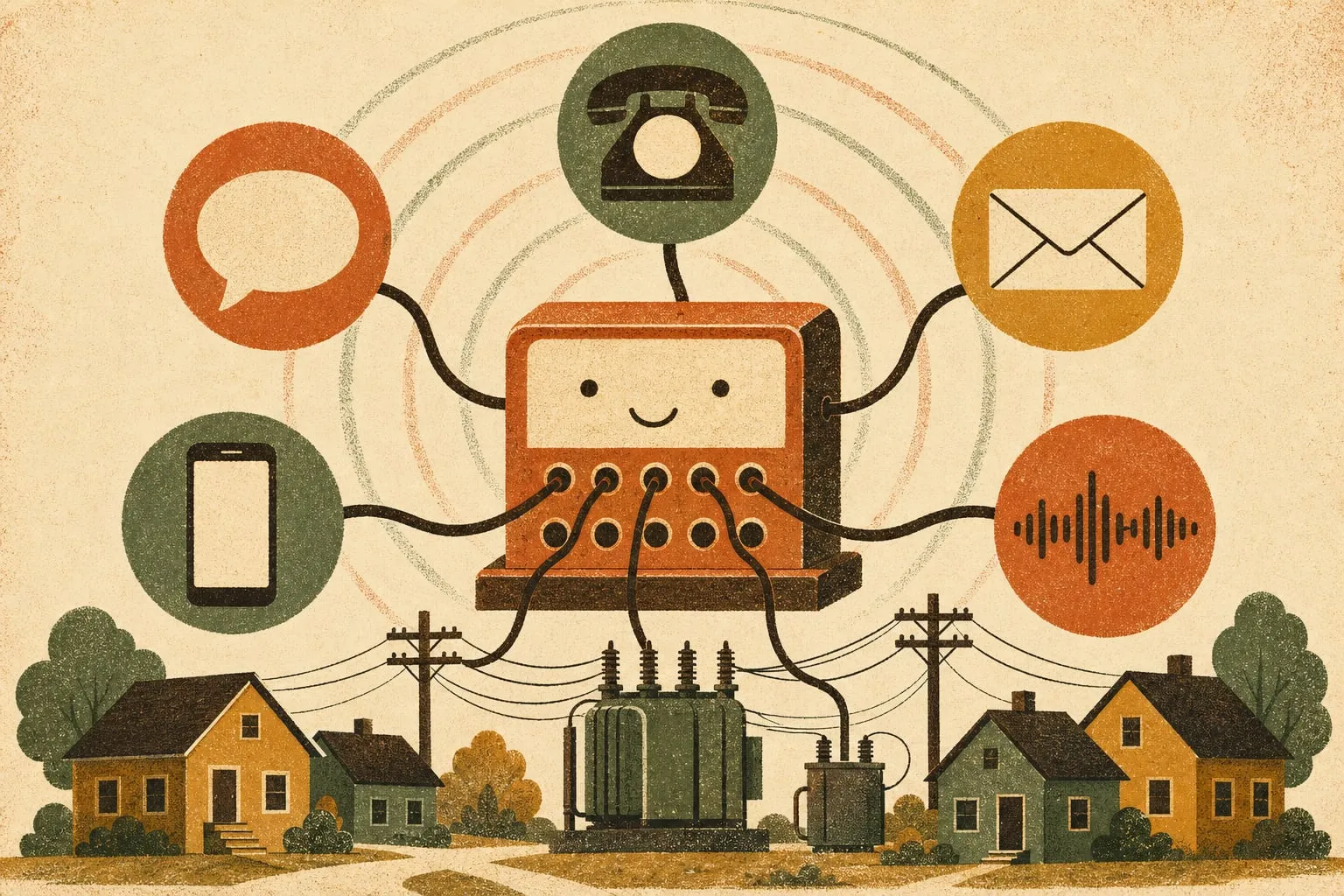
At ESC Partners, I lead product work on a service AI platform for utility teams. It connects customer-facing voice and chat assistance with a console for frontline agents. A shared AI foundation brings together conversations, account information and service workflows, with integrations suited to each deployment.
I joined as an AI Product Engineer in January 2026 and moved into AI Product Management in August. My work spans defining what to build, hands-on implementation, integration coordination, training and iteration with users.
Start with the agent’s workflow
The console addressed a practical problem: agents had to piece together account information, customer conversations and prior interactions to understand a request. The product direction was to bring that context into one working view and help the agent decide what to do next.
That required choices about scope. Early demo planning focused on account context and conversation support, while deeper integrations and more ambitious features were deferred. Synthetic demo data was identified as such. The first experience had to make the workflow understandable before we expanded it.
Make suggested replies follow the conversation
In an early console build, an account’s billing information could dominate a draft even when the customer’s latest question was about something else, such as automatic payments.
I worked on changes that used the latest question to shape the suggested reply and surfaced that question among the draft’s context sources. Related changes refreshed drafts when new messages arrived and cleared stale writing suggestions when an agent sent or replaced a message.
The lesson was specific: a reply can sound plausible and still be wrong for the moment. Relevance, freshness and the agent’s ability to review it belong in the product requirements.
Connect the interface to real operations
Service actions depend on the systems that hold customer records. I mapped the operations the product needed against available integrations, prioritized the gaps and worked through questions about inputs, responses and multi-step flows with the relevant specialists.
My approach is to retrieve account facts from source systems and calculate bill amounts in code before generating an explanation. Identity checks, confirmation and human review belong inside consequential workflows. When an action’s outcome is unclear, the workflow should stop and hand over with context.
Own the work after the build
I use AI coding tools to prototype and implement, alongside engineering collaborators. I define tasks and acceptance criteria, review the behavior and work through the edge cases. Demonstrations and training then help expose what the product still needs.
Frontline feedback led to work on clearer past-due information, account relationships and billing explanations. I also worked on activity reporting, separating recorded usage from modeled time-saving estimates so the product’s impact could be discussed honestly.
This is the part of AI product work I care about: connecting a useful idea to the details that make it work for people, then staying close enough to improve it.